Background
The Department was experiencing a number of recurring issues with its existing website. These included challenges with how the main website interacted with several linked subsites, as well as difficulties around how academics were uploading and categorising publications.
We worked with the Department to understand these issues and identify what was needed from a new website. The aim was not simply to replace the existing site, but to address the underlying problems and create a platform that would better support the Department and its different audiences in the future.
Following the website project, our involvement continued as the Department turned to us for further projects, technical support and advice.
Getting started
Before we could address the technical issues, we needed to understand how the website was being used across the Department and what different audiences and teams needed from it.
We spent several weeks speaking to people across the organisation, including colleagues involved in study courses, Research Centres, the Deanery and communications. These conversations helped us understand the problems with the existing website, as well as the wider objectives for the new site, the needs of its different audiences and how content needed to work across the organisation.
This gave us a clear foundation for the new website, from its functionality and content structure through to the design and user experience.
Solving pain points
Our support did not stop while the new website was being developed. Although we had not built the existing website, we worked with the Department to understand and resolve issues where we could, helping them keep the site working effectively while the new platform was being developed.
More recently, we were also able to step in when a key member of the Department's IT team left. We helped bridge the resulting knowledge gap, providing technical continuity and support while the Department recruited a replacement.
This is an important part of how we work with our clients. We are there to provide technical expertise when it is needed, whether that is as part of a planned project or in response to an unexpected challenge.
Our design solutions
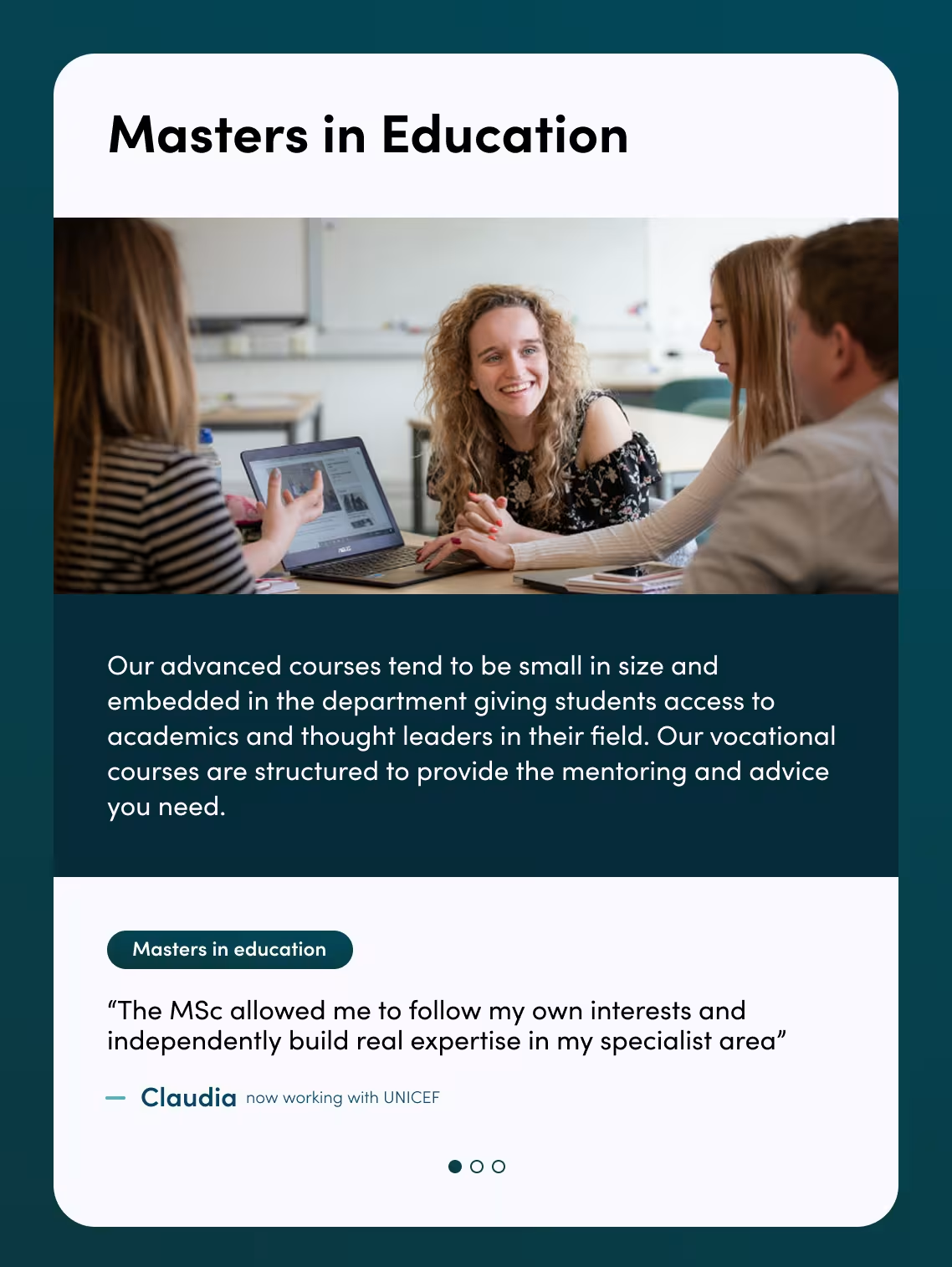
The website needed to serve a range of audiences, from professional educators researching postgraduate courses and research opportunities to prospective PGCE students.
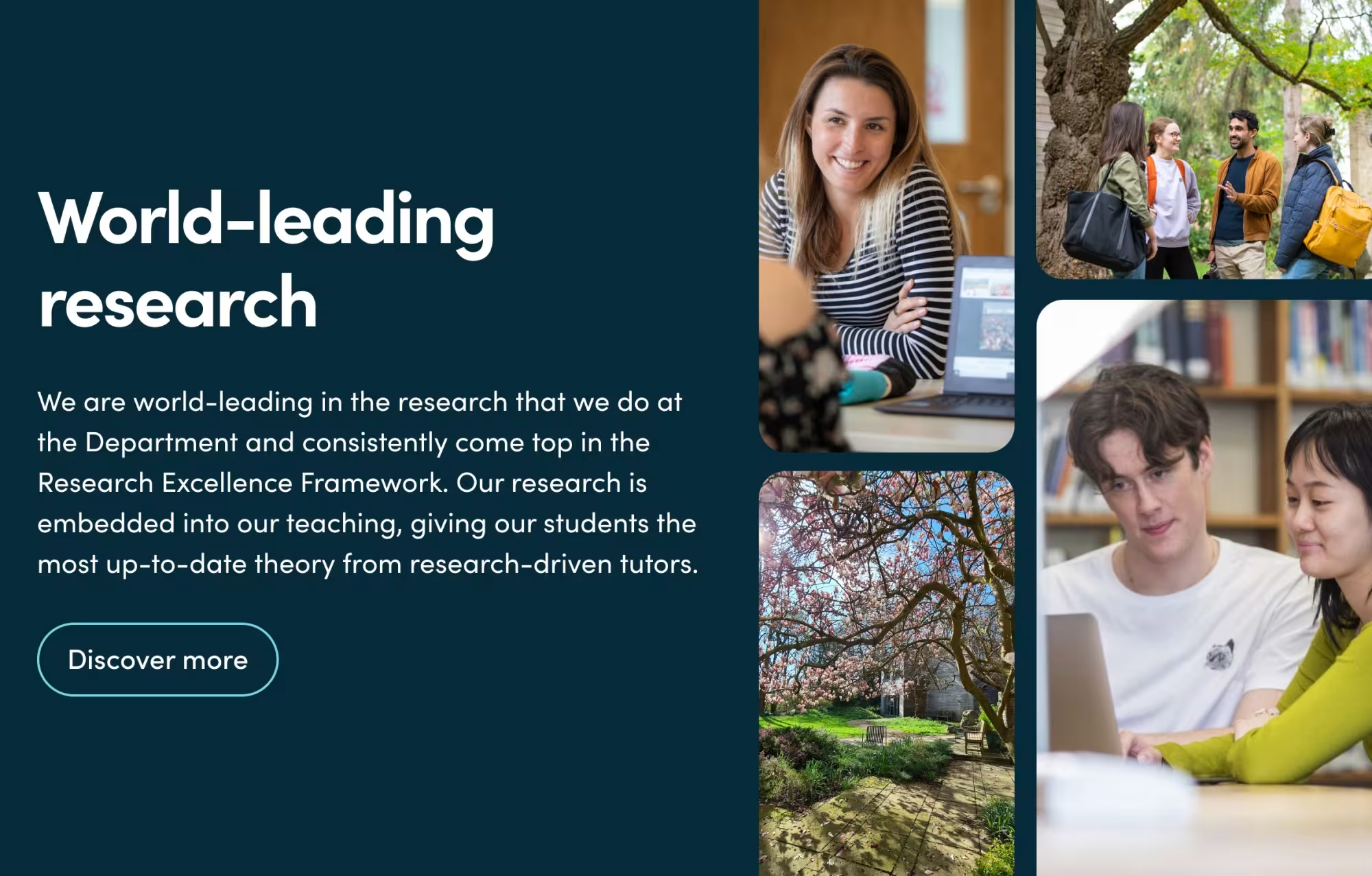
Our design focused on making it easier for these different audiences to find the information most relevant to them, while creating a clearer and more consistent experience across the Department's content.
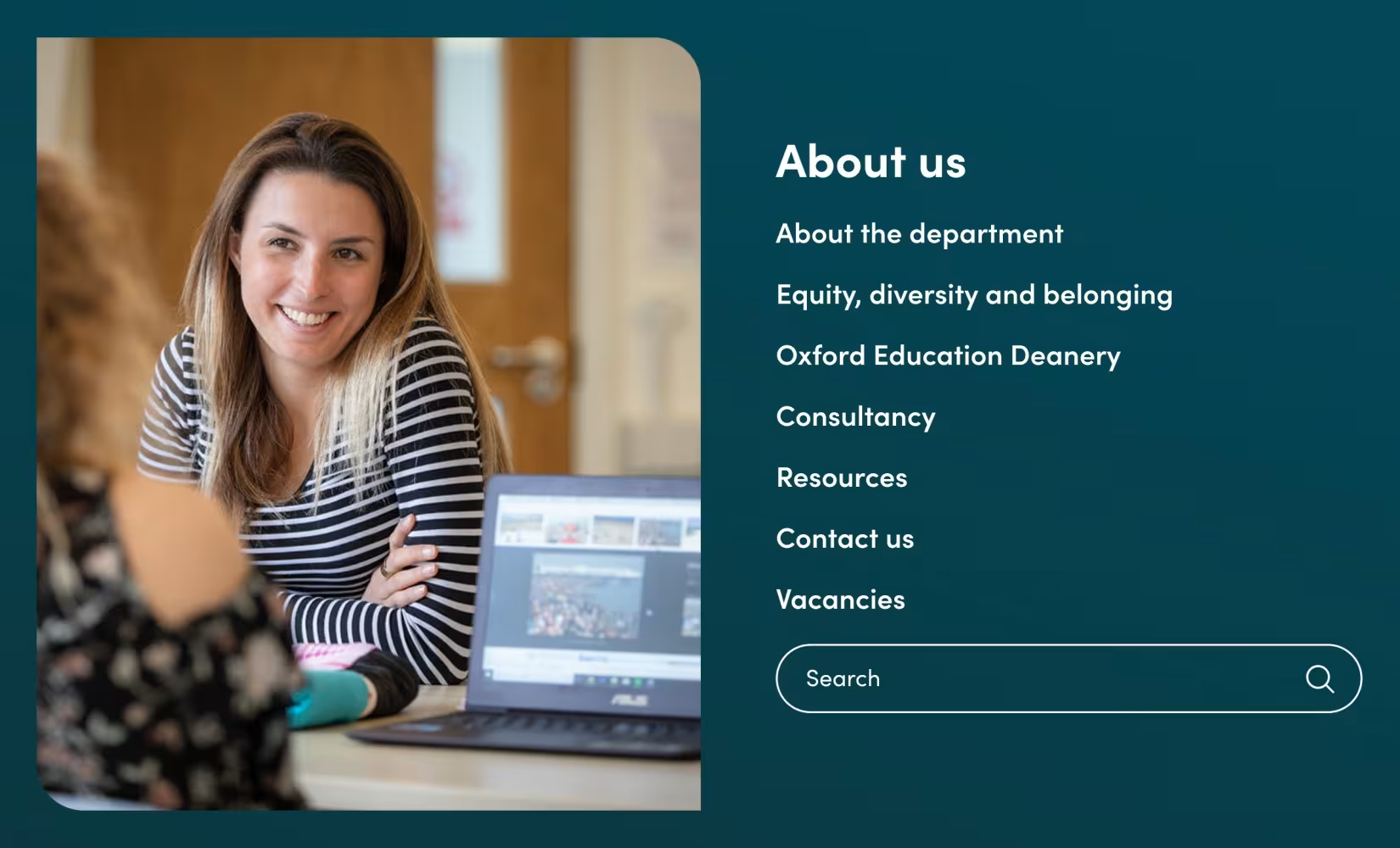
We introduced clearer navigation and user journeys, with key messages and relevant content brought into the experience at the points where users needed it. The result was a cleaner and more intuitive website that could better support the Department's different audiences and areas of activity.
Our technical solution
The new website was developed in WordPress, as requested by the Department. A key part of our role was addressing the technical issues they had experienced with the previous website and ensuring these were resolved as part of the new platform.
We created a more robust foundation for managing content and the relationship between the main website and its associated sites, while making it easier for the Department's teams to manage and update content themselves.
The outcome
The new website marked an important stage in our relationship with the Department of Education, but it was not the end of it. Since the website launched, we have continued to support the Department with further digital and technical requirements.
We have since continued to support the Department with further website projects, including a re-theme of their Skope Research Centre website and the development of additional subsites for their Research Centres. These projects have allowed us to build on the work we did with the main website, while giving individual Research Centres flexible, easy to maintain websites of their own.
We are also continuing to work with the Department on ideas for further enhancing their main website, including movement, animation and additional functionality. Alongside this, we have recommended an editor refresh session to help the team get more from the website's content management features and make better use of the functionality already available to them.
The result is a long term partnership that has continued to grow beyond the original website project. The Department has a technology partner they know and trust, who understands their organisation, can help when challenges arise and can continue to support them as their digital requirements evolve.